What Can Cause Lung Cancer In A Non Smoker / EFFECTS OF SMOKING AND WHY YOU SHOULD QUIT. — Steemit : The latter group is more likely to develop lung cancer as a result of a genetic mutation or abnormality.
Dapatkan link
Facebook
X
Pinterest
Email
Aplikasi Lainnya
What Can Cause Lung Cancer In A Non Smoker / EFFECTS OF SMOKING AND WHY YOU SHOULD QUIT. — Steemit : The latter group is more likely to develop lung cancer as a result of a genetic mutation or abnormality.. Cigarette smoke contains thousands of chemicals, many of which are carcinogens. In the past five to 10 years, new knowledge about lung cancer has changed the way it is treated in both smokers and nonsmokers. Secondhand smoke contains hundreds of toxic chemicals, 70 of which are known to cause cancer. 2 secondhand smoke causes more than 7,300 lung cancer deaths among u.s. There are two different types.
That's because it breaks down into tiny particles that can get into your lungs and damage cells there. Workplace exposures to asbestos, diesel exhaust or certain other chemicals can also cause lung cancers in some people who don't smoke. Workplace exposure to asbestos and other substances known to cause cancer — such as arsenic, chromium and nickel — can increase your risk of developing lung cancer, especially if you're a smoker. Inhaling asbestos and other substances such as arsenic, chromium, nickel, soot, and tar can increase lung cancer risk. Most people with lung cancer are older than 65.
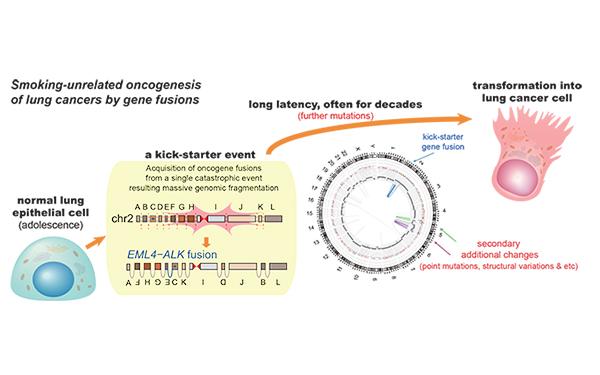
Early genome catastrophes can cause non-smoking lung ... from bioengineer.org While cigarette smoking is the no. Multiple studies have confirmed that smoking is by far the leading cause, as close to 90 percent of all lung cancers stem from tobacco use. First, you need to know about various things, which can cause lung cancer. Adenocarcinoma starts in the mucus cells that line your lungs. A small portion of lung cancers occur in people with no known risk factors for the disease. Secondhand smoke contains hundreds of toxic chemicals, 70 of which are known to cause cancer. Workplace exposures to asbestos, diesel exhaust or certain other chemicals can also cause lung cancers in some people who don't smoke. These risk factors include exposure to other people's smoke (called secondhand smoke), radon, air pollution, a family history of lung cancer, and asbestos.
1 cause of lung cancer, you also can get it from breathing secondhand smoke, being exposed to asbestos or radon, or having a family history of lung cancer.
Sidestream smoke (the more toxic of the two) is. A small portion of lung cancers occur in people with no known risk factors for the disease. Inhaling asbestos and other substances such as arsenic, chromium, nickel, soot, and tar can increase lung cancer risk. This type of smoke is responsible for approximately 7,330 lung cancer deaths each year. Workplace exposure to asbestos and other substances known to cause cancer — such as arsenic, chromium and nickel — can increase your risk of developing lung cancer, especially if you're a smoker. While cigarette smoking is the no. Cigarette smoke contains thousands of chemicals, many of which are carcinogens. In this case, if you are friend or family member of a. That's because it breaks down into tiny particles that can get into your lungs and damage cells there. There are two different types. Although the human body can often detoxify and get rid of carcinogens, when it's not able to do so, leftover carcinogens can cause the cells in the body to mutate, sometimes transforming. Due to their location away from the large airways, these tumors often grow quite large or spread before they cause any symptoms. Secondhand smoke causes lung cancer in adults who have never smoked.
Although the human body can often detoxify and get rid of carcinogens, when it's not able to do so, leftover carcinogens can cause the cells in the body to mutate, sometimes transforming. People with a parent, sibling or child with lung cancer have an increased risk of the disease. First, you need to know about various things, which can cause lung cancer. Workplace exposures to asbestos, diesel exhaust or certain other chemicals can also cause lung cancers in some people who don't smoke. Family history of lung cancer.
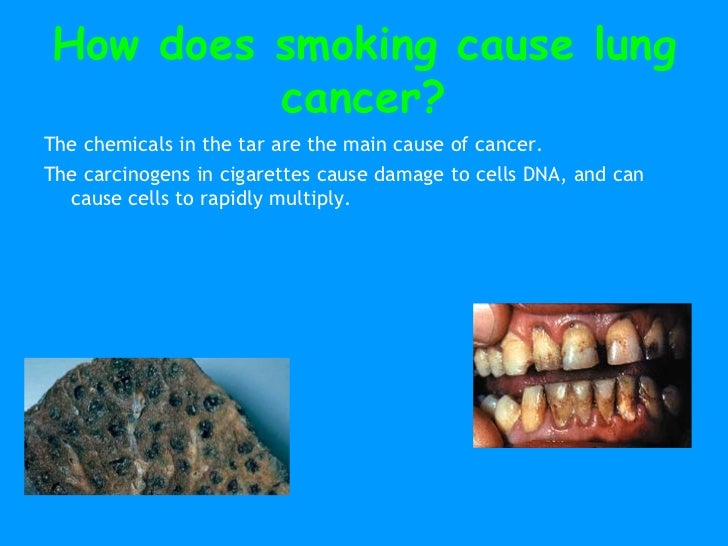
Smoking & Cancer PPT from image.slidesharecdn.com A small portion of lung cancers occur in people with no known risk factors for the disease. Secondhand smoke causes lung cancer in adults who have never smoked. Gas or air pollution exposure. That's because it breaks down into tiny particles that can get into your lungs and damage cells there. The fact is that you can experience this ailment even if you have never smoked a cigarette. Sidestream smoke (the more toxic of the two) is. The latter group is more likely to develop lung cancer as a result of a genetic mutation or abnormality. According to the us environmental protection agency (epa), radon is the second leading cause of lung cancer in this country, and is the leading cause among people who don't smoke.
Gas or air pollution exposure.
2 secondhand smoke causes more than 7,300 lung cancer deaths among u.s. Having other lung diseases such as emphysema, chronic bronchitis, tuberculosis, or chronic. If you breathe in radon over long periods of time, you may end up with lung cancer. Environmental cigarette smoke exposure and different types of smoking have been shown to cause pulmonary carcinoma. Inhaling asbestos and other substances such as arsenic, chromium, nickel, soot, and tar can increase lung cancer risk. Secondhand smoke causes lung cancer in adults who have never smoked. Although the human body can often detoxify and get rid of carcinogens, when it's not able to do so, leftover carcinogens can cause the cells in the body to mutate, sometimes transforming. The fact is that you can experience this ailment even if you have never smoked a cigarette. Multiple studies have confirmed that smoking is by far the leading cause, as close to 90 percent of all lung cancers stem from tobacco use. In this case, if you are friend or family member of a. Most people with lung cancer are older than 65. Workplace exposure to asbestos and other substances known to cause cancer — such as arsenic, chromium and nickel — can increase your risk of developing lung cancer, especially if you're a smoker. Lung adenocarcinomas tend to grow in the outer regions of the lungs.
This type of smoke is responsible for approximately 7,330 lung cancer deaths each year. In the past five to 10 years, new knowledge about lung cancer has changed the way it is treated in both smokers and nonsmokers. That's because it breaks down into tiny particles that can get into your lungs and damage cells there. Although the human body can often detoxify and get rid of carcinogens, when it's not able to do so, leftover carcinogens can cause the cells in the body to mutate, sometimes transforming. If you breathe in radon over long periods of time, you may end up with lung cancer.
Not just a smoker's disease: 5 causes that can lead to ... from akm-img-a-in.tosshub.com According to the us environmental protection agency (epa), radon is the second leading cause of lung cancer in this country, and is the leading cause among people who don't smoke. Gas or air pollution exposure. The latter group is more likely to develop lung cancer as a result of a genetic mutation or abnormality. Secondhand smoke causes lung cancer in adults who have never smoked. There are two different types. A small portion of lung cancers occur in people with no known risk factors for the disease. Just living with a smoker increases your chance of developing lung cancer or heart. Workplace exposures to asbestos, diesel exhaust or certain other chemicals can also cause lung cancers in some people who don't smoke.
In this case, if you are friend or family member of a.
While cigarette smoking is the no. The national safety council tells us that one in 15 homes in the united states has radon levels that exceed the epa's safety levels. Due to their location away from the large airways, these tumors often grow quite large or spread before they cause any symptoms. Secondhand smoke includes smoke exhaled by a smoker and smoke emitted from the lit end of a cigarette, pipe, or cigar, or from tobacco burning in a hookah. According to the us environmental protection agency (epa), radon is the second leading cause of lung cancer in this country, and is the leading cause among people who don't smoke. Family history of lung cancer. Research suggests that smoking causes lung cancer by creating cell mutations. A small portion of lung cancers occur in people with no known risk factors for the disease. Squamous cell carcinoma of the lungs These risk factors include exposure to other people's smoke (called secondhand smoke), radon, air pollution, a family history of lung cancer, and asbestos. Secondhand smoke causes lung cancer in adults who have never smoked. If you breathe in radon over long periods of time, you may end up with lung cancer. Most people with lung cancer are older than 65.
Syarat ganti plat ini juga cukup sederhana, dan tinggal anda lengkapi saja. Pasalnya, jika anda tidak melakukan hal ini, tentu saja akan sangat merepotkan untuk mengurus perpanjang stnk atau penggantian plat nomornya . Silahkan masukkan nomot plat kendaraan yang ingin anda cek datanya. Penggantian plat nomor kendaraan dilakukan . Biaya ganti plat motor jika anda lakukan sendiri sebenarnya tidak banyak. PUSAT KURSUS, Belajar /pembelajaran, Pendidikan, Les from bakpiapathuk.files.wordpress.com Selain itu, tentunya untuk memudahkan saat memperpanjang stnk atau ganti pelat nomor kendaraan. Biaya ganti plat motor jika anda lakukan sendiri sebenarnya tidak banyak. Penggantian plat nomor kendaraan dilakukan . Silahkan masukkan nomot plat kendaraan yang ingin anda cek datanya. Menggratiskan biaya keterlambatan bayar pajak dan bea balik nama kendar...
What Are The First Symptoms Of Blood Cancer - The main symptoms of blood cancer - and why people don't ... - A cancer can grow into,or begin to push on nearby organs, blood vessels, and nerves. . What are the early symptoms of blood cancer blood cancer. Blood in the urine, whether clearly visible or only visible under a microscope, may be an early sign of bladder cancer, luckenbaugh explained. Some blood cancers may cause symptoms such as severe fatigue, weight loss, night sweats, or lymph node swelling, says scott frederick huntington, md, mph, a yale medicine hematologist in the department of hematology. While a healthy diet can lower the risk of developing certain cancers, other factors like genes. Most blood cancers begin in bone marrow where blood is produced. Reta brownlow, head of patient services at bloodwise said: The swelling is mostly painless in nature. New cases of blood cancer account for 10 percent of new cancer diagnoses each year. Your first clue...
How To Make A Good Pokemon Card Deck / How to Make a Strategic Pokémon Trading Card Deck: 5 Steps - How to build your pokemon cards into a deck. . Such bets can get heated, even among friends, so make sure you are on good terms and agreeable with the person you are challenging. However, its ability dark asset is what makes it so good. Very roughly, think of your deck of 60 cards as having 20 pokemon, 20 energy cards, and 20 trainer cards. You should have around 5 or so cards to support and boost up your pokémon. If you're looking to build a pokemon tcg deck for the first time, or maybe you're just looking for simple ways to improve your deck building skills, this vid. There have been several great new cards printed and many unusual decks in standard lately, and the metagame features both classic archetypes and unique budget brews. They aren't super powerful on their own but can keep the damage rolling if it's not a good time for eternatus to be up ...


Komentar
Posting Komentar